
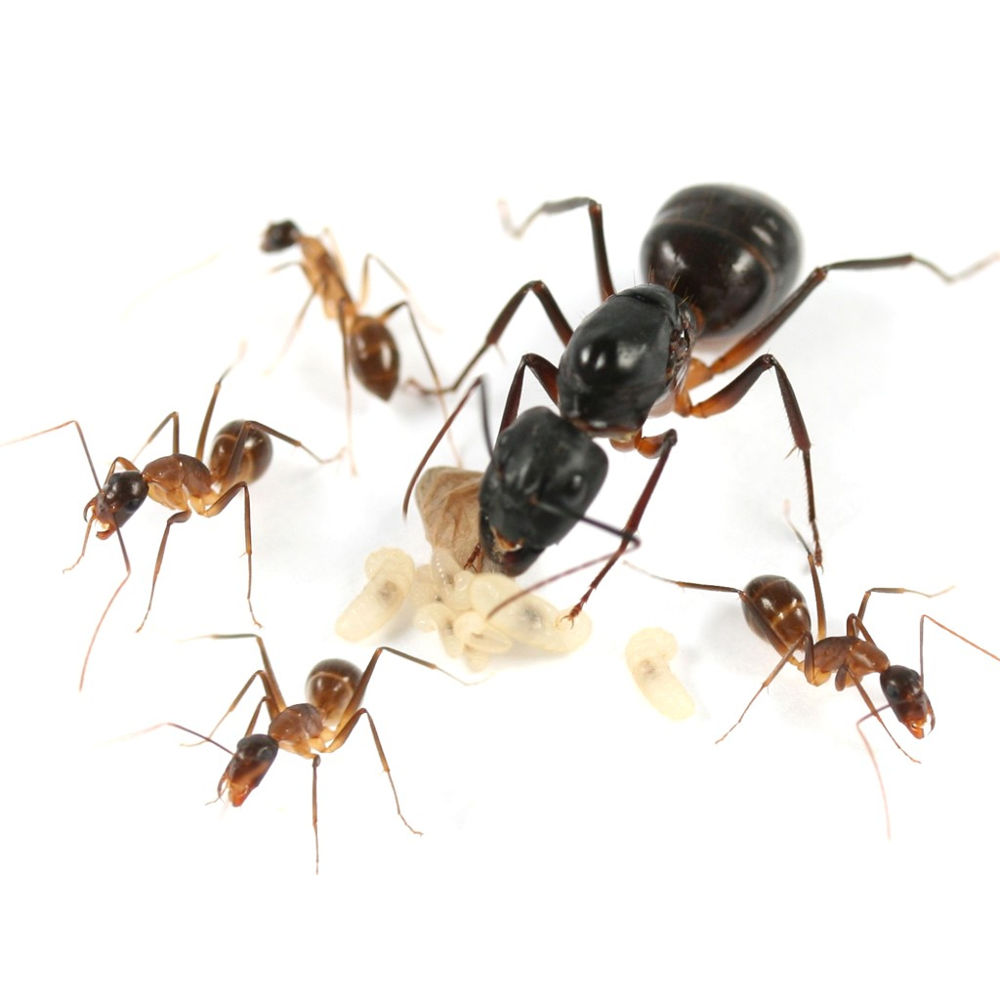
Camponotus fellah – Colony with queen and workers
The initial price was: €119.00.115,00€The current price is: €115.00.
Camponotus fellah is a very beautiful African species with an impressive size. Easy to raise, it doesn't require overwintering, allowing you to enjoy it year-round. Recommended by Fourmiculture for Camponotus enthusiasts!
Out of stock
Description
Camponotus fellah benefits from the Fourmiculture for our ants:
1. Breeding approved by the Veterinary Services, conducted by a specialist with a certificate of competence,
2. Free "Perfect Ant Keeper's Guide" and information sheet provided,
3. Ants guaranteed parasite-free,
4. Health demonstrated by the queen laying eggs and the presence of brood upon shipment,
5. No "boost" (addition of brood or external workers to sell colonies faster),
6. Guaranteed delivery in good health: partial refund in case of worker loss, full refund in case of queen loss (if delivered within 48 hours),
not threatened,
9. Colony buyback and costs covered if you wish to part with it (see conditions).
Camponotus fellah is a magnificent species from the Middle East, very large, and relatively easy to keep, requiring only light overwintering and low humidity. Its coloration is orange-yellow with black on the abdomen and head, and its size is particularly impressive. The majors are superb and aggressive, readily defending the colony at the slightest attack! They are excellent hunters.
More videos on the Campo-Zone .
Compared to Camponotus sanctus: less humidity to expect, slightly darker colouring, majors probably larger.
Camponotus fellah has a minor worker caste of approximately 6-7mm, and later, a major worker caste appears with a developed head and a size of around 1.5cm to 1.8cm. The "small" minor workers are lighter in color and vary from transparent yellow to darker orange depending on the colony.
Raising Camponotus fellah is easy; their diet is varied and unique, consisting of jellies, sugary liquids, insects, etc. Overwintering is not necessary. This makes them more accessible than European Camponotus species
Queen size (Camponotus fellah): approximately 15 mm
. Worker size: 6-7 mm. Up to 18 mm for majors, which arrive later in the colony.
Daytime temperature: 27-30°C for optimal development
Nighttime temperature: 19-24°C.
Humidity: Low. Only a small part of the nest should be damp.
Overwintering: Not necessary
| Latin name: |  |
Ca mponotus fellah |
| Trivialname: |  |
– No common noun |
| Taxonomy: |  |
Subfamily: Formicinae: Genus Camponote |
| Difficulty level |  |
1) Suitable for beginners |
| Distribution: |  |
North Africa, Middle East |
| Habitat: |  |
Deserts (in nature), anthills made of plexiglass, plaster or sand in captivity |
| Type of gynecologist: |  |
monogynous, sometimes olygogynous |
| Queen: |  |
Size: 17–19 mm Color: Black; Reddish-brown gaster and legs |
| Female workers: |  |
Size: 7–18 mm Color: Black; reddish-brown abdomen and legs, extremely polymorphic (with small minor workers, medium media workers, and large major workers) |
| Soldiers: |  |
They are generally considered to be major workers (high-ranking female workers with powerful heads) |
| Males: |  |
Size: 8-12mm Color: black |
| Food |  |
Sugary and protein-rich liquids, insects |
| Humidity : |  |
Dry hunting area, nest with low to medium humidity |
| Temperature: |  |
A hot spot of 28°C should be provided on the nest |
| Hibernation: |  |
No hibernation but a light rest of 2 or 3 months with reduced growth and room temperature. |
| Type of natural nest: |  |
Builds its nest in the ground |
| Type of artificial nest: |  |
Plexiglas, aerated concrete, plaster, terrarium, etc |
| Nest size: |  |
Small to medium-sized for beginners, with chambers at least 8mm deep |
| Substrate: |  |
Wood, sand, a sand/potting soil mix, or no substrate at all |
| Plants: |  |
Not necessary. It also lives in forest and mountainous regions with moss, grass, and other plants. However, it is better suited to dry environments. |
| Decoration: |  |
Not necessary, wood, pebbles, gravel, etc. are all suitable. |
| Origin : |  |
Africa (one of the largest species in Africa) and the Middle East (Türkiye, Arab countries) |
| Growth : |  |
6-8 weeks from egg to adult. Swarming in March/April. Claustral foundation (the queen raises the larvae alone). Estimated lifespan of the queen: up to 29 years! Estimated maximum population: 10,000 workers. |
| Quantity for sale: |  |
Fertilized queen + brood + workers (depending on option) |
Additional information
| Weight | 0.2 kg |
|---|---|
| Young colony feeding area | Tube + Plexiglas feeding area, Tube with ants only |
You must be logged in to post a review.
Notice
There are no reviews yet.