
Camponotus consobrinus – Australia
Magnificent colony with a large brood nest. Exceptional size. Endemic Australian species with beautiful coloration. Easy to raise and requires no difficult overwintering. Comes with an export certificate.
Description
Introducing Camponotus consobrinus:
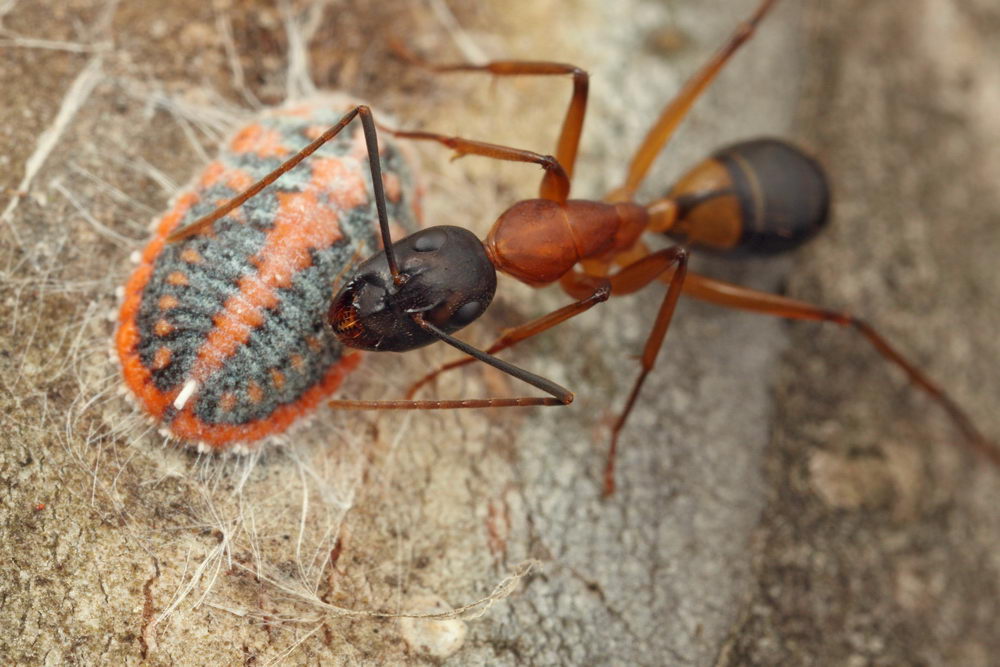
Camponotus consobrinus is a species selected for its appeal in captivity thanks to its impressive size and significantly easier husbandry compared to European Camponotus species. It develops rapidly and overwintering is not essential (a slight drop in temperature is possible in the autumn). Its coloration is superb, combining black and orange.
Easy to feed, it appreciates sweet liquids, aphid honeydew and insects which it hunts with formic acid.
Queen without brood (recent swarming), laying expected in the coming weeks. Do not feed the queen until the first workers emerge. Place the queen at around 27°C during the day.
Significant polymorphism is observed, with small minor workers of approximately 5mm and major workers of 14 to 15mm in length appearing in more developed colonies, possessing a massive and powerful head to defend the nest. The queen can occasionally reach 20mm in length, far exceeding the largest European species!
Camponotus consobrinus thrives easily when the temperature is 27°C. It grows in a nest with low to medium humidity and our artificial ant farms are very suitable for it, possibly with an adaptation of the height of the chambers and the installation of the queen by the feeding area due to her size.
In addition, the addition of an external feeding area (such as an Observation Area) is recommended for this species, which enjoys exploring a large area in search of food.
Camponotus consobrinus in its natural environment:
Camponotus consobrinus is a species endemic to Australia, common in the forests of the southeast. Ground exploration takes place at all hours but it comes out particularly at dusk and uses pheromone trails, but also collective transport (one worker carries another) or tandem (one worker guides a line of followers in contact by antennae).
Often competing with Iridomyrmex purpureus in the slightly drier regions where it also ventures, this species uses the technique of burying the entrance to the opposing nest under stones to prevent them from leaving while foraging. During fights, Camponotus consobrinus can assume a threatening posture by raising its abdomen before attacking with its mandibles. It can also spray its opponent with formic acid. While not particularly dangerous to humans, the bite of the soldiers can still be very painful, and it is essential to keep the workers away from your eyes to protect yourself from the formic acid.
Camponotus consobrinus digs its nest in all types of terrain, in the ground, wood or under stones. The chambers are about 1cm high.
The cocoons of Campontus consobrinus were also part of the Aboriginal diet.
_______________________________________________________________
The Fourmiculture Charter on legislation and ethics:
Fourmiculture offers this exceptional species originating from Australia, a country that combines both the most impressive species in the world, and extremely strict legislation on their collection and export.
Because many exotic species for sale are of fraudulent origin, Fourmiculture is working with the authorities. The colony will arrive with:
1/ an export certificate
2/ an Australian veterinary certificate
3/ a health and legal information sheet.
These documents attest to our official authorization to collect and export a limited number of queens of this species. Each colony is checked individually to confirm the absence of parasites and the presence of brood.
We import them via ultra-fast carrier, regardless of the cost, to ensure safe transport. The queens are collected during swarming, without destroying nests, and in extremely limited quantities.
Fourmiculture is also an establishment recognized by the French veterinary services, in possession of a certificate of competence for the breeding and sale of ants, validated by myrmecologists, civil and environmental protection services (decision No. 2016195-0002 of the Departmental Directorate for the Protection of Populations).
As a private individual, keeping this species does not require any authorization as it is neither protected, nor threatened, nor invasive, nor dangerous. However, we remind you that the bite of soldier ants can be very painful and that eyes must be kept away from their formic acid spray (short range). Finally, releasing the colony into the wild is prohibited, and we will buy back your colonies for up to €50.
_____________________________________________________________
Charter Fourmiculture on this exotic species:
1/ Health demonstrated by the queen laying and the presence of brood upon shipment, guaranteed parasite-free,
2/ No "boost" (addition of brood or external workers to sell colonies faster, the queen has been raised since swarming),
3/ Guaranteed delivery in good health: partial refund in case of loss of workers, total in case of loss of the queen (if delivered within 48 hours),
4/ Breeding guide offered and health record provided,
5/ Colony taken back up to €50 and costs covered if you wish to part with it if colony returned in good health (see conditions).
Success Guarantee:
We only sell perfectly healthy colonies and guarantee them during transport. For those who are extra cautious, we offer a 3-month Success Guarantee: in the event of the loss of the colony up to 3 months after delivery, regardless of the reason, a new colony will be shipped free of charge (subject to availability, upon presentation of photographic evidence within 91 days of shipment. Return shipping is at our expense within mainland France).
___________________________________________________________
The Fourmiculture Charter on delivery:
Our experience allows us to virtually eliminate losses during transport, and we use specially designed and tested packaging. Your order will be delivered by courier within 48 hours, and any loss of the colony during transport will automatically entitle you to a 100% refund. We will add insulated packaging if necessary, at no extra cost.
_______________________________________________________________
More information on Camponotus consobrinus:
– Queen size: 16 to 20 mm
– Worker size: 5-15 mm
– Rearing temperature: 27°C during the day, 20-24°C at night
– Hibernation: None, or a short rest period at around 15-20°C for 2 months in the autumn.
– Food: Sugary and protein-rich liquids, small live insects (crickets size 2 to 4, fruit flies, mosquitoes, etc.) or dead insects, frost, meat, etc.
– Humidity requirements: Medium.
– Generally monogynous (one queen maximum per colony), sometimes polygynous in the wild.
– Maximum colony population: estimated at several thousand workers.
– Color: Black with orange coloration over much of the body, depending on the worker and colony.
– Estimated maximum lifespan of the queen: 7 to 15 years
Photo: Copyright Antkeepingdepot
Additional information
| Number of female workers |
|---|
You must be logged in to post a review.
Notice
There are no reviews yet.