
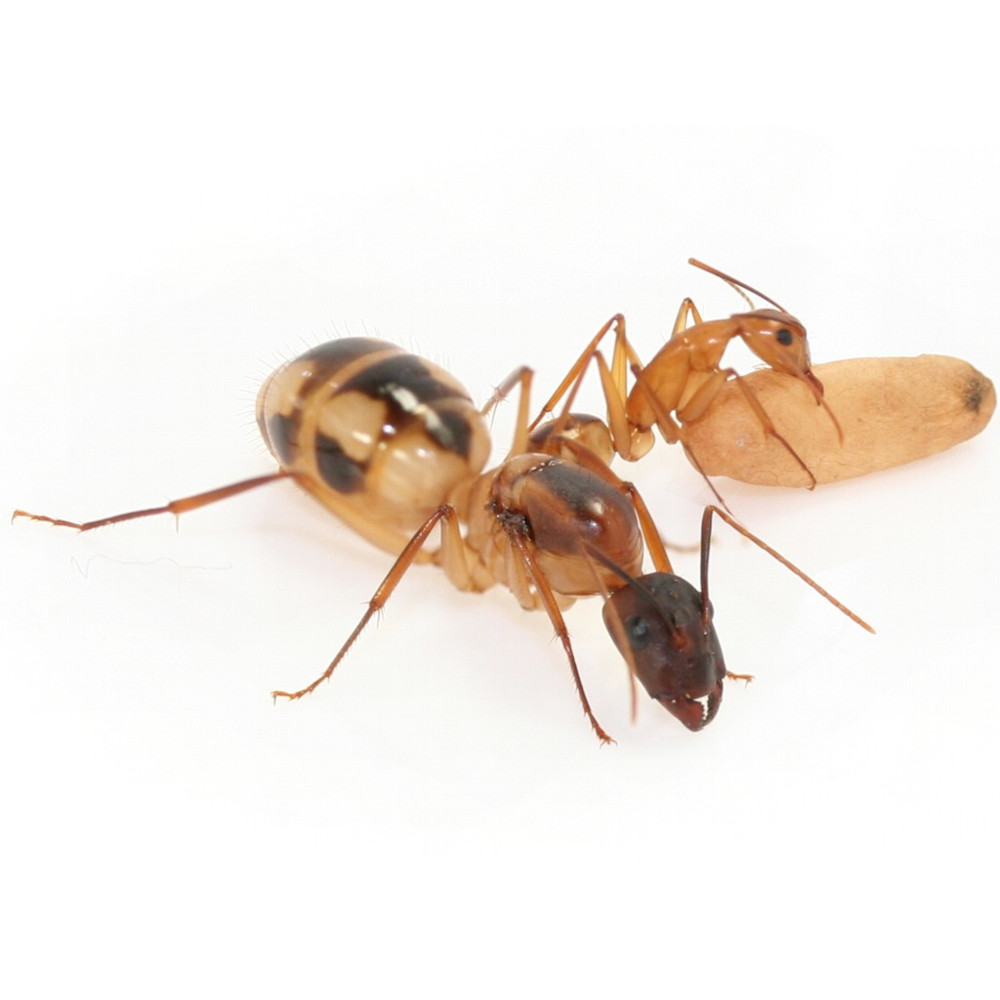



Camponotus maculatus – Colony with queen and workers
Price range: €139.00 to €148.00
Camponotus maculatus is one of the most beautiful species, but also one of the easiest to raise. A favorite that's easy to keep, originating from the Middle East and Africa.
Description
Camponotus maculatus benefits from the Fourmiculture for our ants:
1. Breeding approved by the Veterinary Services, conducted by a specialist with a certificate of competence,
2. Free "Perfect Ant Keeper's Guide" and information sheet provided,
3. Ants guaranteed parasite-free,
4. Health demonstrated by the queen laying eggs and the presence of brood upon shipment,
5. No "boost" (addition of brood or external workers to sell colonies faster),
6. Guaranteed delivery in good health: partial refund in case of worker loss, full refund in case of queen loss (if delivered within 48 hours),
not threatened,
9. Colony buyback and costs covered if you wish to part with it (see conditions).
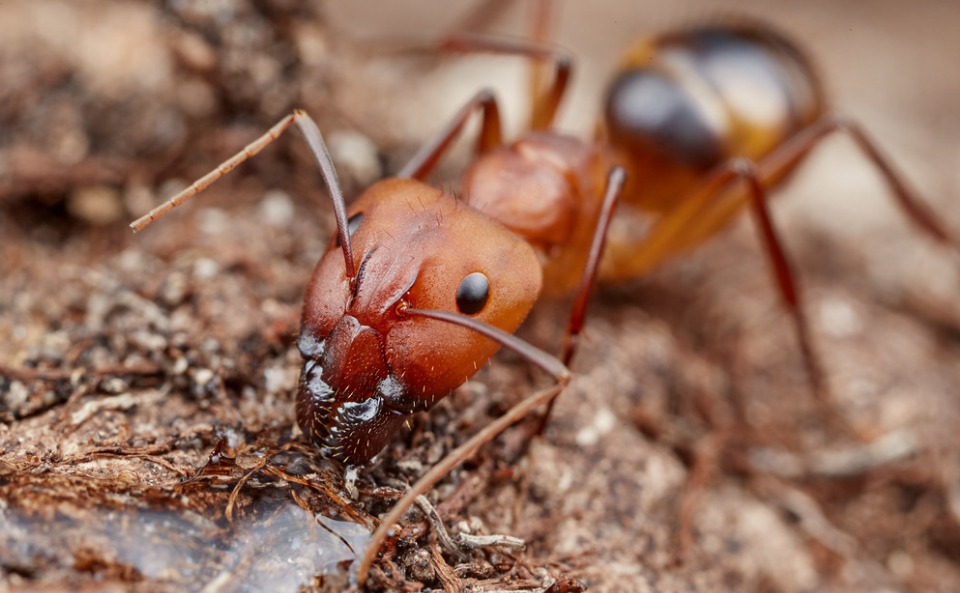
Camponotus maculatus is one of the most beautiful species we raise. Rare and native to Africa, it displays a magnificent translucent yellow coloration in its workers, and black with yellow spots on the queen's abdomen. The workers are divided into several sizes. The large major workers are very powerful and darker, offering a particularly striking contrast. Workers of all sizes are capable of storing large quantities of liquid food, exhibiting remarkable physogastry as their abdomen swells and becomes translucent.

Growth is rapid and activity is high, making it a magnificent choice for fully enjoying myrmecology. It is accessible to beginners (drought-tolerant, easy to feed…) and impresses experienced breeders.
Colonies raised in France from a single queen.
Discover a Camponotus maculatus breeding guide in video format by FeuFeu, a Swiss ant breeding channel:
Info: Campontus is not listed as an invasive species, it has only 1 queen and is not very aggressive towards other species, however, its adaptability calls for a reminder of the obvious rules of caution (prohibition of releasing ants into the wild, the purchase of an ant colony implies the provision of suitable equipment).
| Latin name: |  |
Camponotus maculatus |
| Common name: |  |
No specific name |
| Taxonomy: |  |
Subfamily: Formicinae Genus: Camponotini |
| Difficulty level: |  |
(1) Suitable for beginners |
| Distribution: |  |
Africa, Madagascar, Greece, Middle East |
| Habitat: |  |
Savannas and dry forests |
| Monogynous: |  |
Only one queen per colony, sometimes a few queens tolerate each other (olygogynes) |
| Queen : |  |
Size: 15-18mm Colour: Head and gaster black, thorax yellowish, abdomen dark with yellow spots. |
| Female workers: |  |
Size: 8-16mm Colour: Dark head, yellow thorax, black abdomen with yellow. Overall very light colour. |
| Soldiers: |  |
Not soldiers per se, but large, powerful and aggressive female workers. |
| Males: |  |
Size: 8 – 11mm Colour: Orange-yellow, brown, winged. |
| Food : |  |
Nectar, sugar water, fresh insects, protein liquid |
| Humidity : |  |
Hunting area: Ambient humidity (30-50%). Nest : One part must always be very humid, and the other part dry, approximately half the nest. However, a water dish seems to compensate for a dry nest (at your own risk). |
| Temperature: |  |
Hunting range: 18–30°C Nest: 24–28°C |
| Hibernation: |  |
It slows down its growth rate in winter. A period of 2 or 3 months at a reduced temperature (around 15°C) is recommended. |
| Type of natural nest: |  |
It builds its nest in the ground, under stones or in dead wood. |
| Type of artificial nest: |  |
Any type of nest large enough, compatible with Fourmiculture |
| Nest size: |  |
Chamber height of 8mm or more. Start with a fairly small nest to reduce stress. |
| Substrate: |  |
Pre-dug nest or sand mixture. |
| Plants: |  |
No particular interaction. Avoid using substrate for plants. |
| Decoration: |  |
Solid elements that are unlikely to rot in the nest. |
| Summary : |  |
Camponotus maculatus is one of the largest species of African ants. It is very active on the surface of the nest, foraging for food. It is aggressive and will defend itself against any attack. Its activity is at its peak in the evening and at night. |
| Growth : |  |
Swarming: From March to April. Foundation: Claustral (the queen founds her colony alone) but sometimes pleometrosis (the workers accompany the queen) or adoption of the new queen by an existing colony. From egg to adult: approx. 6–8 weeks at 27°C (Egg to larva: approx. 10–14 days, larva to cocoon: approx. 12–17 days, cocoon to worker: approx. 21–30 days). Camponotus maculatus is active mainly from April to September. The queen can live up to 29 years. Adult colony size: Up to 10,000 workers. |
| Quantity for sale: |  |
1 queen with brood + workers as per option. |
Photos 1: Antstore, next photos: Philip Herbst
Additional information
| Weight | 0.5 kg |
|---|---|
| Number of female workers | 1 Queen + 1 to 4 workers , 1 Queen + 11 to 25 workers , 1 Queen + 5 to 10 workers |
| Young colony feeding area | Tube + Plexiglas feeding area, Tube with ants only |
You must be logged in to post a review.
Notice
There are no reviews yet.