
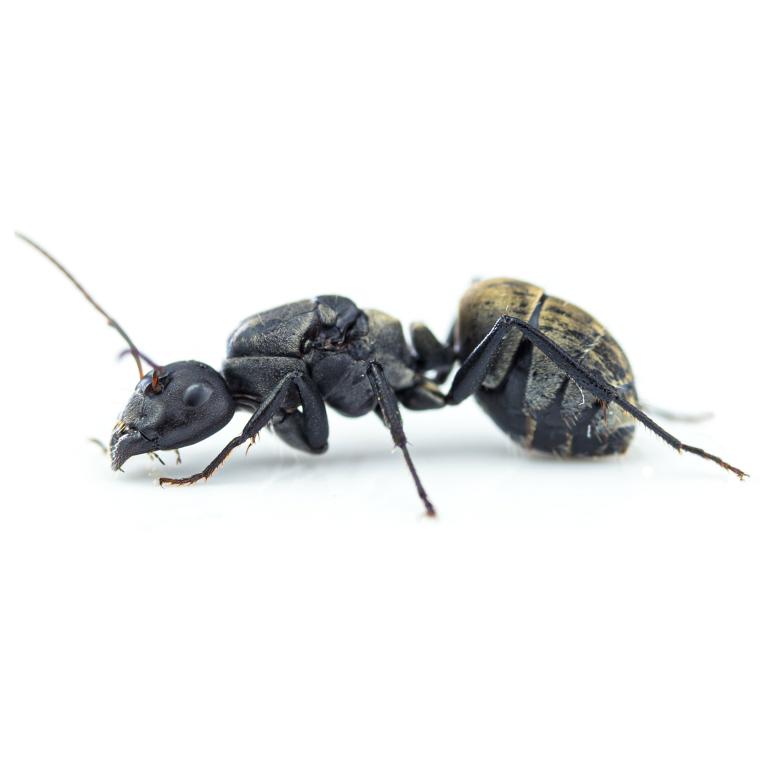
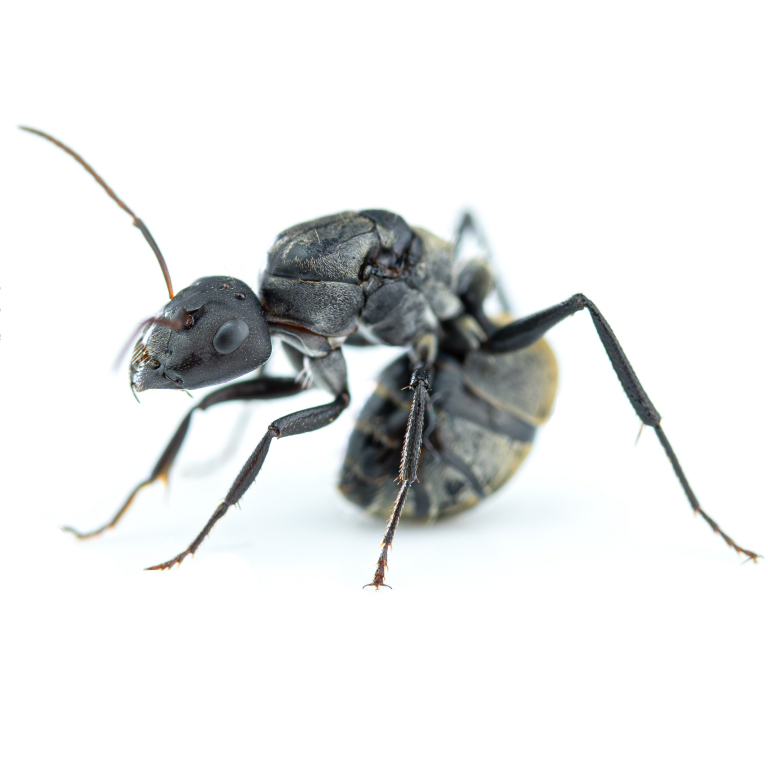
Camponotus sericeus – Colony with queen and workers
Colonies of Camponotus sericeus, African golden carpenter ant
You'll love it:
- ❤️ Significant polymorphism: small workers alongside massive majors,
- ❤️ Beautiful, original color with a golden abdomen,
- ❤️ Classic and simple food,
- ❤️ No need for diapause, active all year round,
- ❤️ Free delivery and guaranteed safe delivery by courier within 24 hours (for purchases over €200 within the European Union)
Description
Discover the Golden Carpenter Ants: Camponotus sericeus
Presentation of the species: Camponotus sericeus
Camponnotus sericeus are carpenter ants (often living in wood) but capable of adapting to quite varied environments. They are found in the wild from Africa to southern Asia. Our colonies originate specifically from sub-Saharan Africa. Of a size suitable for observation, they are of average size for Camponotus (that is to say, very large compared to our Lasius ants!) and are aesthetically pleasing due to the beautiful golden sheen on their abdomen. Rather calm at first, they are capable of reacting very quickly when threatened, curling their abdomen to face the danger.
Camponotus sericeus breeding tips
This species appreciates warmth and a classic diet for Camponotus (sweet liquids, protein creams, jellies, insects, etc.).
Breeding this ant is therefore quite easy, especially since it doesn't require diapause and will appreciate warmth year-round to continue its development. However, colony growth is rather slow at first.
Main features:
- Worker size: From 7 to 11 mm approximately, with a massive head for the majors.
- Queen size : approximately 11mm
- Diet: Opportunistic and omnivorous. Feed them nectar, insects, and a variety of proteins ad libitum.
- Difficulty level: Intermediate. This species requires a stable environment in terms of temperature and humidity.
- Nest type: Nests with relatively high humidity, natural biotope, concrete, etc. Avoid overly dry wood.
Recommended living conditions:
- Temperature: Between 26°C and 28°C during the day, between 20°C and 24°C at night.
- Humidity: The majority of the nest should have high humidity.
- Wintering: No diapause, but a break in heating for 6 weeks may possibly be beneficial.
Key features:
- Powerful Majors: Majors are very powerful workers, with a massive head and formidable mandibles.
- Original colour: The golden abdomen and matte black body of this species give it a special appeal.
Ethical commitment and quality:
At Fourmiculture , we place paramount importance on the well-being of our colonies. Our colonies are imported by direct flight , a method that significantly reduces stress and mortality associated with shipping by parcel.
After their arrival, they are acclimatized in our facilities , under perfectly controlled climatic conditions, to guarantee their stability and health. This approach allows us to offer robust and well-developed colonies.
Express delivery recommended!
⚠️ Important : To preserve the balance of local ecosystems, we do not sell this species in tropical areas such as Réunion, Guadeloupe, Martinique, etc.
To be considered invasive, a species must meet 4 criteria: 1/ Introduction: a species arrives in a territory where it is not native 2/ Acclimation: the species survives in its new territory 3/ Naturalization: the species reproduces in its new territory 4/ Expansion: the species colonizes this territory and spreads, to the detriment of local species which it will supplant or even totally eradicate.
In our opinion, this species has no invasive potential in metropolitan France due to its fragility to cold and its short lifespan which does not allow the workers to survive the winter.
Photo: Copyright Antstore.net
Additional information
| Number of female workers |
|---|