
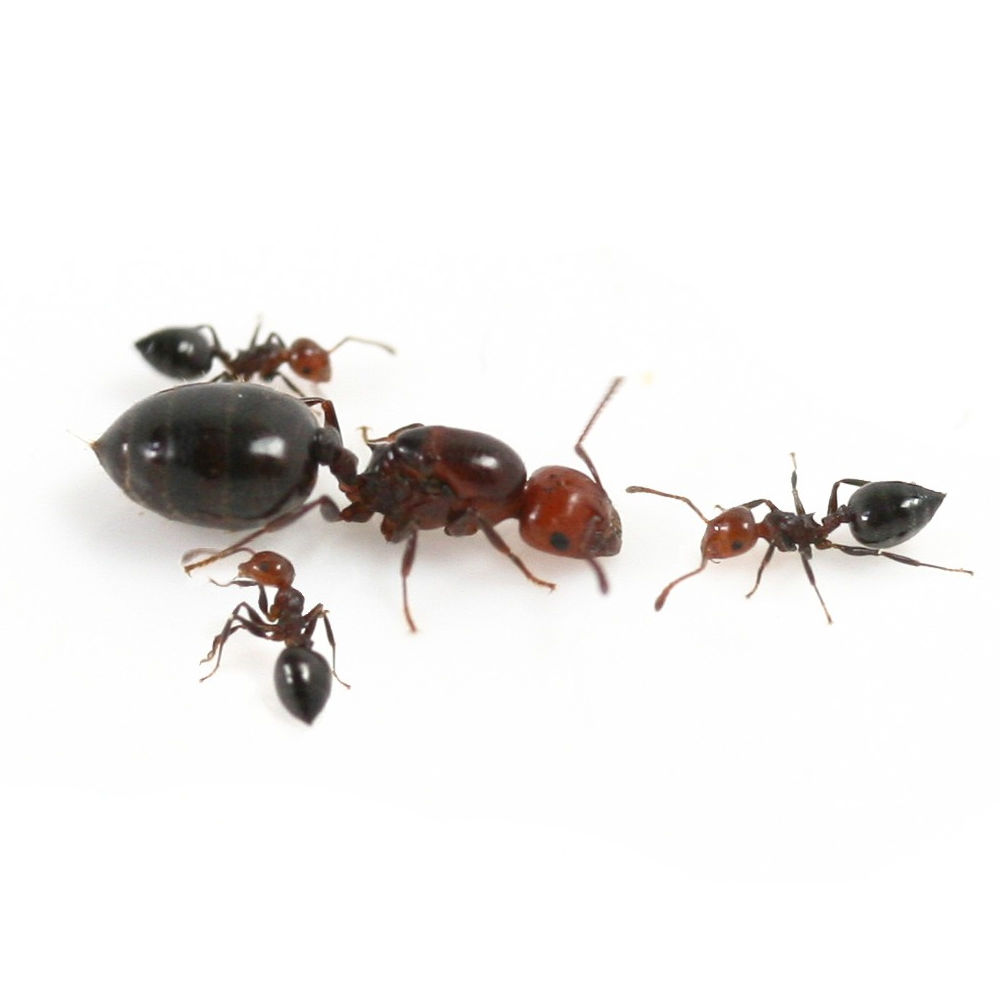

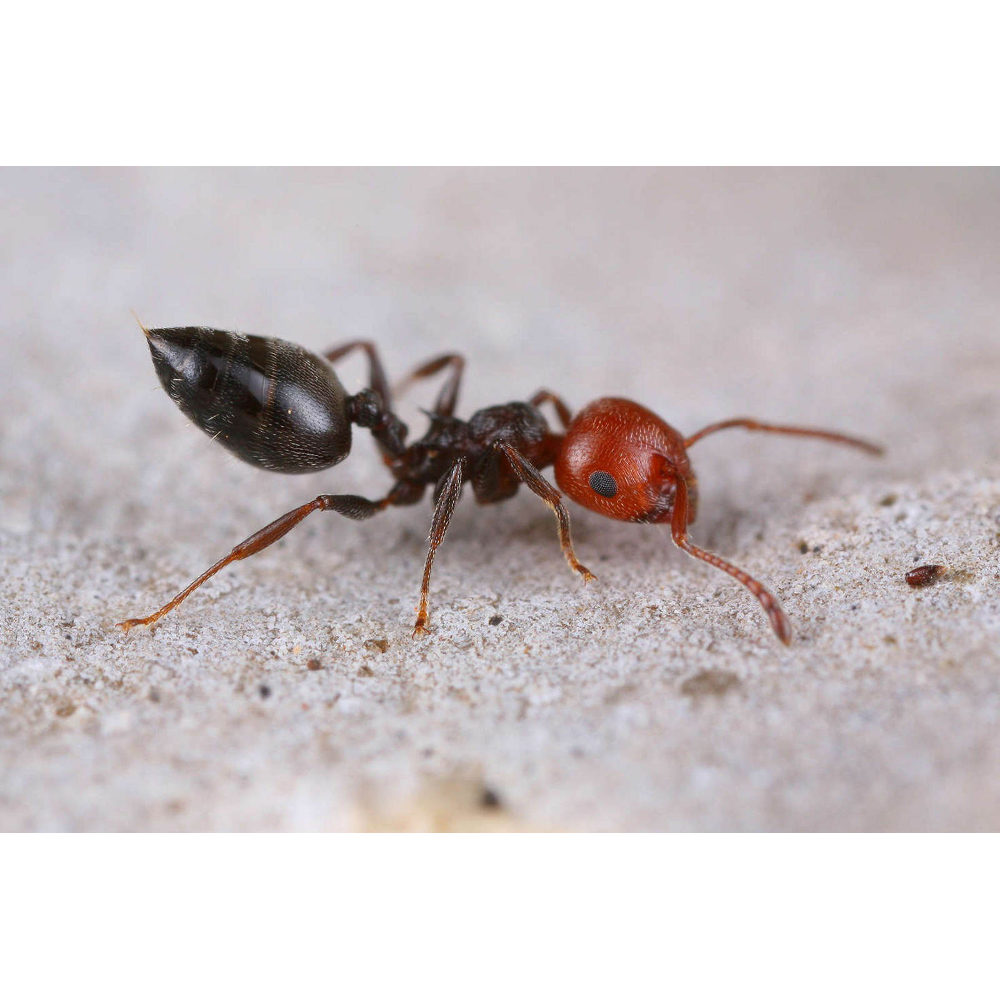
Crematogaster scutellaris Colony with Queen and Workers
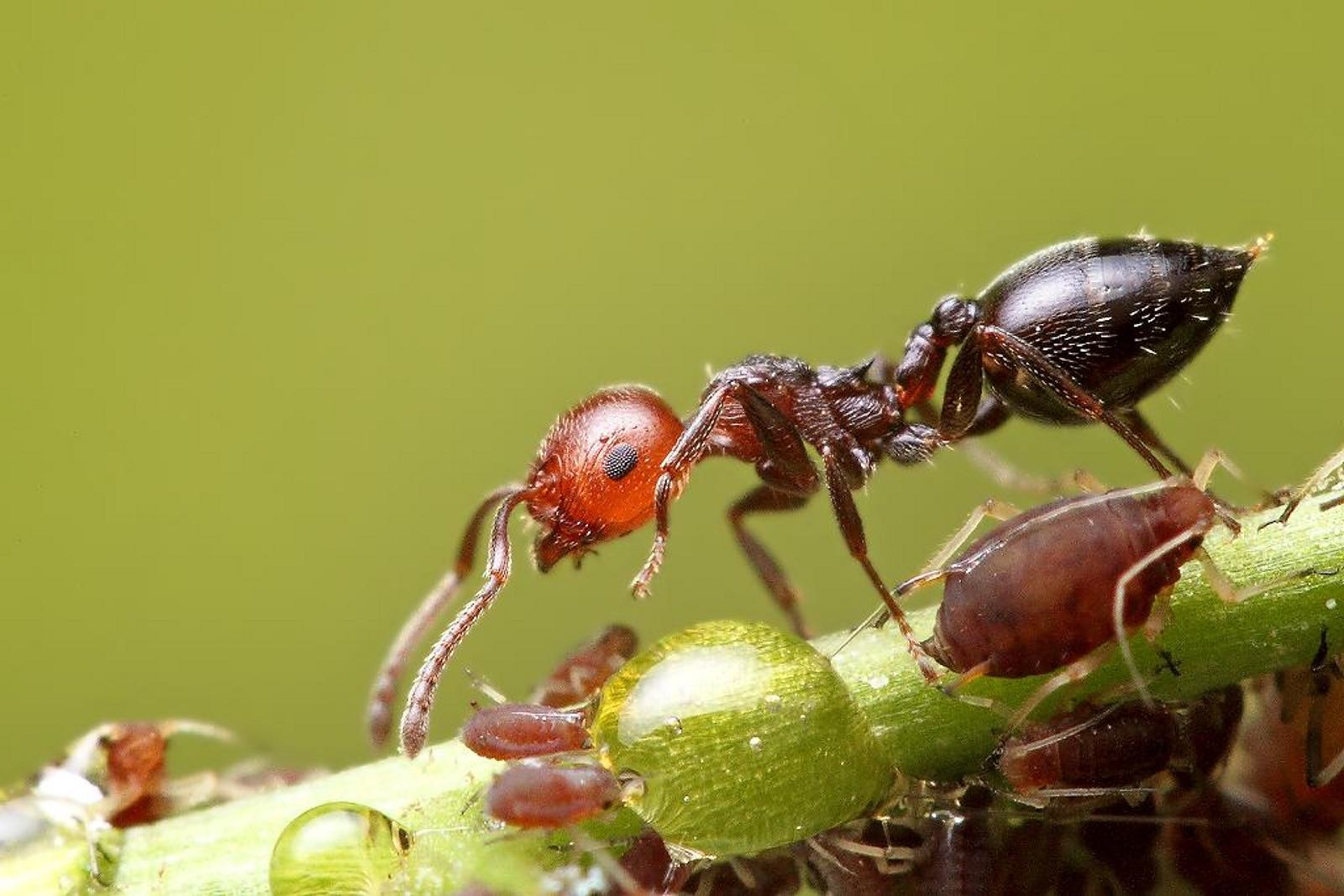
A very unusual species: large egg-laying capacity, very low humidity requirements, secretion of a defensive substance, and the cultivation of aphids… Crematogaster scutellaris is an interesting ant to observe and easy to feed. It ideally lives in a nest made of wood or cork.
Description
Crematogaster scutellaris is covered by the Fourmiculture :
1. Breeding approved by the Veterinary Services, managed by a specialist with a certificate of competence,
2. Free "Perfect Ant Keeper's Guide" and health record provided,
3. Ants guaranteed parasite-free,
4. Health demonstrated by the queen laying eggs and the presence of brood upon shipment,
5. No "boosting" (adding brood or external workers to sell colonies faster),
6. Guaranteed delivery in good health: partial refund in case of worker loss, full refund in case of queen loss (if delivered within 48 hours),
7. Shipping possible from -12°C to +40°C thanks to our optional insulated packaging,
8. Species present in France, non-invasive and not threatened,
9. Colony buyback and costs covered if you wish to part with it (see conditions).
This species also has several unique characteristics. Notably, it possesses a stinger but cannot sting. When panicked, it raises its abdomen and secretes a droplet of defensive substance, held at the tip of its stinger, to alert others of its kind.
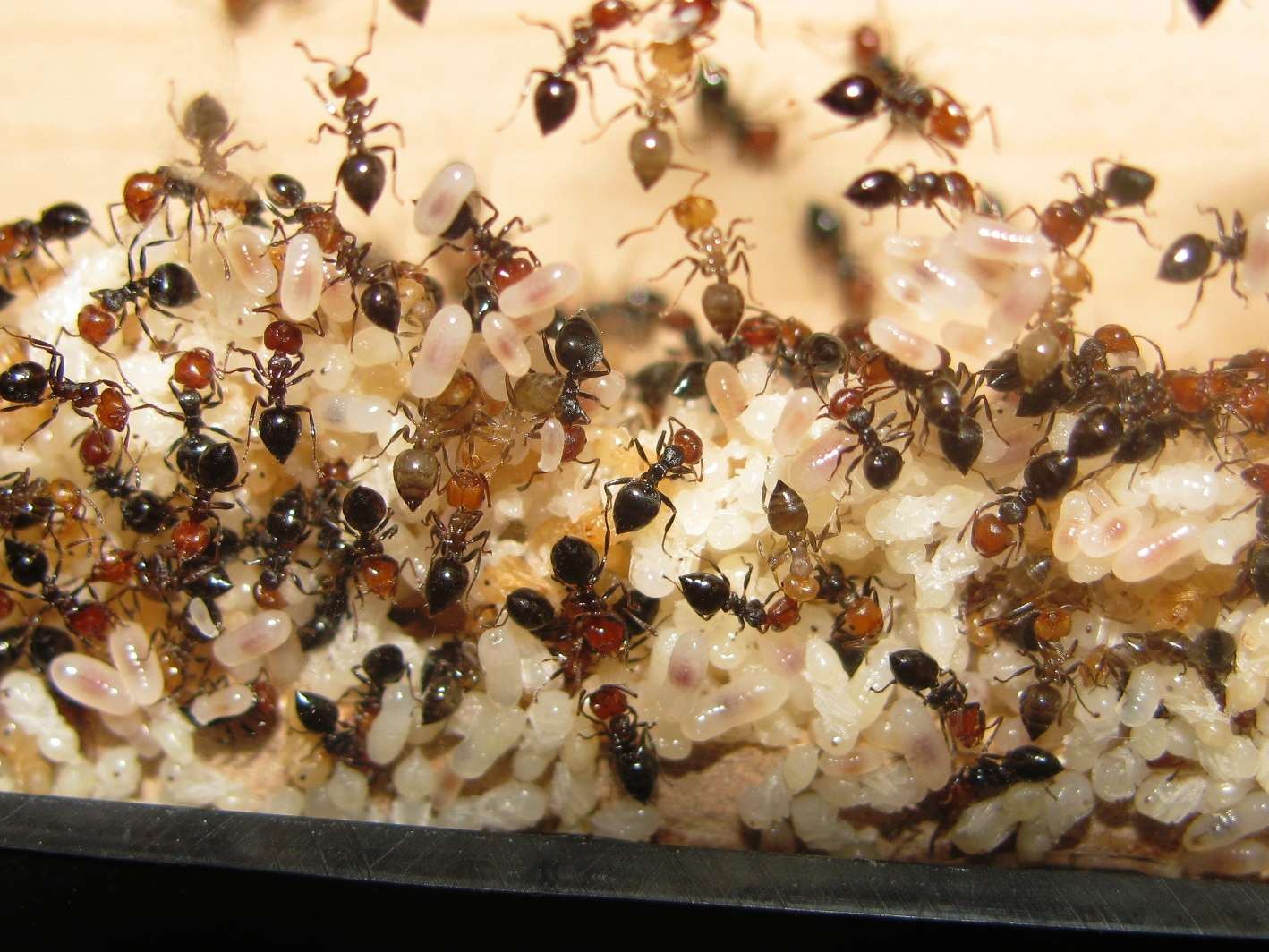
Crematogaster scutellaris develops slowly at first, but once established, the brood (particularly the pupae) takes up an impressive amount of space in the colony, which then begins to grow rapidly, as evidenced by the last photo in our gallery. It takes approximately 45 days for the nymph to develop from egg to adult worker.
In the wild, this species is found in southern France in nests excavated directly in wood, but its ability to live with almost no moisture means it can be found in many different nesting materials. It thrives particularly well in a wooden or cork nest, but also adapts to standard nest boxes. A water dish is recommended to compensate for any lack of moisture, as no species can survive in the complete absence of humidity. Don't forget to add a little moisture to the nest as well.
Crematogaster scutellaris also has a sweet tooth and raises large colonies of aphids to meet most of its nutritional needs, as honeydew is rich in protein and carbohydrates. Therefore, you can feed it sweetened liquids such as honeydew milk (note that using organic products is extremely important). However, our Universal Sweetened Protein Powder will be more balanced.
Crematogaster scutellaris will also appreciate small live insects or insects given at room temperature after being frozen for 3 days, as well as various solid foods: meat, fish, jellies, etc. These foods will be stored in the anthill in small pieces.
Crematogaster scutellaris breeding sheet:
| Latin name: |  |
Crematogaster scutellaris |
| Uncommon: |  |
Cocktail ant in English-speaking countries |
| Taxonomy: |  |
Subfamily: Myrmicinae Genus: Crematogastrini |
| Difficulty |  |
(2) Easy, fast growing, low moisture requirements |
| Distribution: |  |
Southern Europe, Africa |
| Natural habitat: |  |
Pine forests, houses, trees |
| Polygyny: |  |
No, monogynous, 1 queen per colony |
| Queen : |  |
Size: 7-9mm Color: Black with red head |
| Female workers: |  |
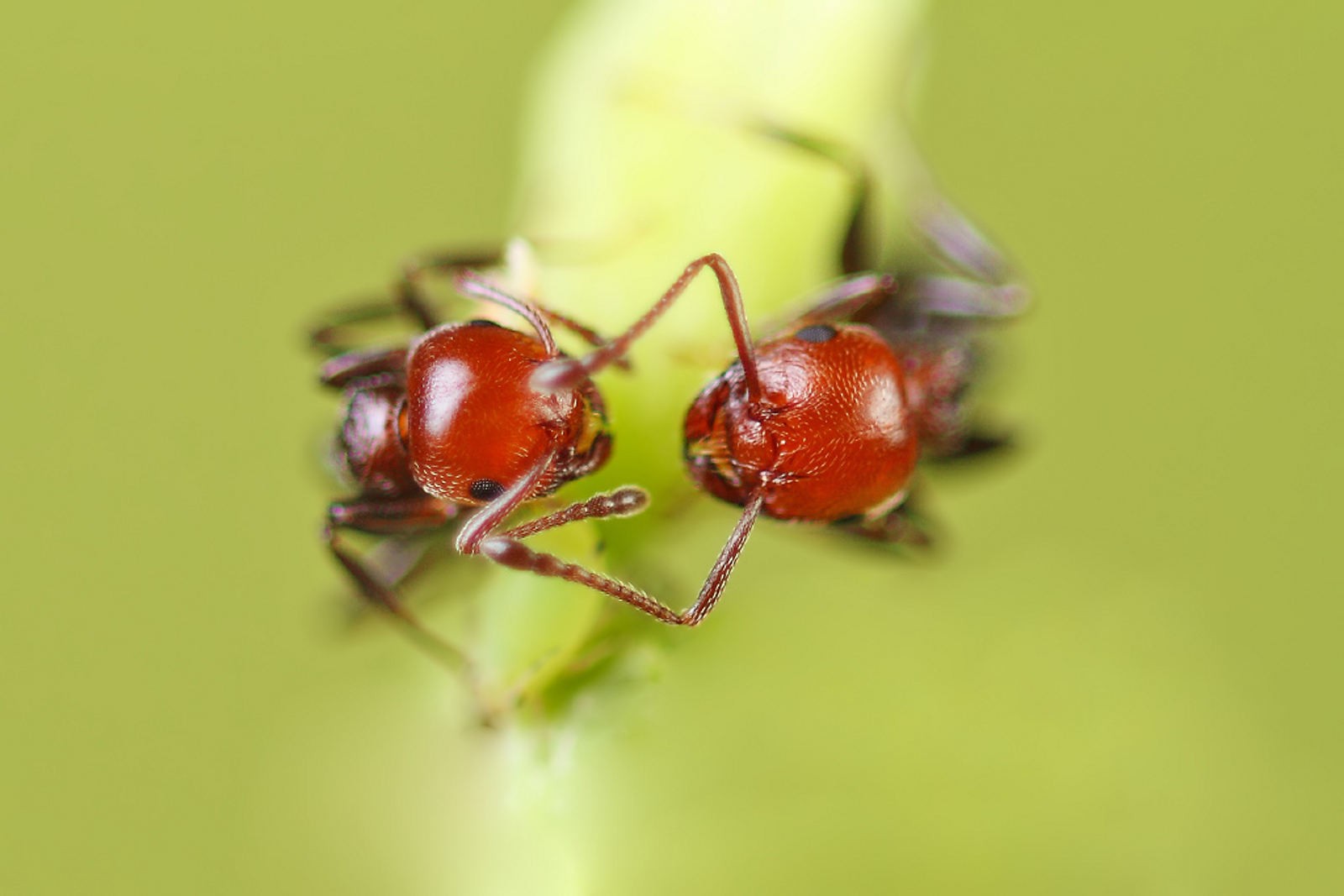
Size: 3-4mm Color: Black with red head |
| Soldiers: |  |
None |
| Males: |  |
Size: 3-4mm. Colour: black. Winged. |
| Food : |  |
Sugar water and insects, honeydew, biscuit crumbs, ham, meat, tuna etc. |
| Humidity : |  |
Hunting area: Small. Nest: Small (approximately 10 to 30% of the surface area) |
| Temperature : |  |
Hunting area: 21 – 28°C Nest: 21°C minimum, develops well at 27, or even 29°C at one point of the nest. |
| Diapause: |  |
Yes, 2 to 3 months is recommended at around 10 to 15°C. Do not let the nest dry out. Feed before winter and possibly during. |
| Type of natural nest: |  |
It builds its nest in trees, dead wood, and sandy soils |
| Type of artificial ant farm: |  |
Cork or wood is preferable. Otherwise, any type of slightly damp nest will do. |
| Nest size: |  |
Start small, in relation to the colony. |
| Substrate: |  |
Wood, cork, special potting soil |
| Plants: |  |
It enjoys plant nectar. Avoid soil in the hunting area. |
| Decoration: |  |
Dead wood, rocks, sand. Beware of parasites and mold. |
| Summary : |  |
Crematogaster scutellaris is a small species from southern Europe that builds its nest with a mixture of chewed wood, like wasps, and also adapts to existing cavities. They are the main predator of the wasp Blastophaga psenes. |
| Growth : |  |
Swarming: August to October. Foundation: Claustral (without feeding). Maximum size: Several thousand workers. |
| Quantity for sale: |  |
1 guaranteed fertilized queen + brood and workers according to option. |
Credits: Photos (Copyright) Antstore, Nikola Rahmé, Raulbaena, fill979, McKillaboy
Additional information
| Weight | 0.1 kg |
|---|---|
| Number of female workers | |
| Young colony feeding area | Tube + Plexiglas feeding area, Tube with ants only |