
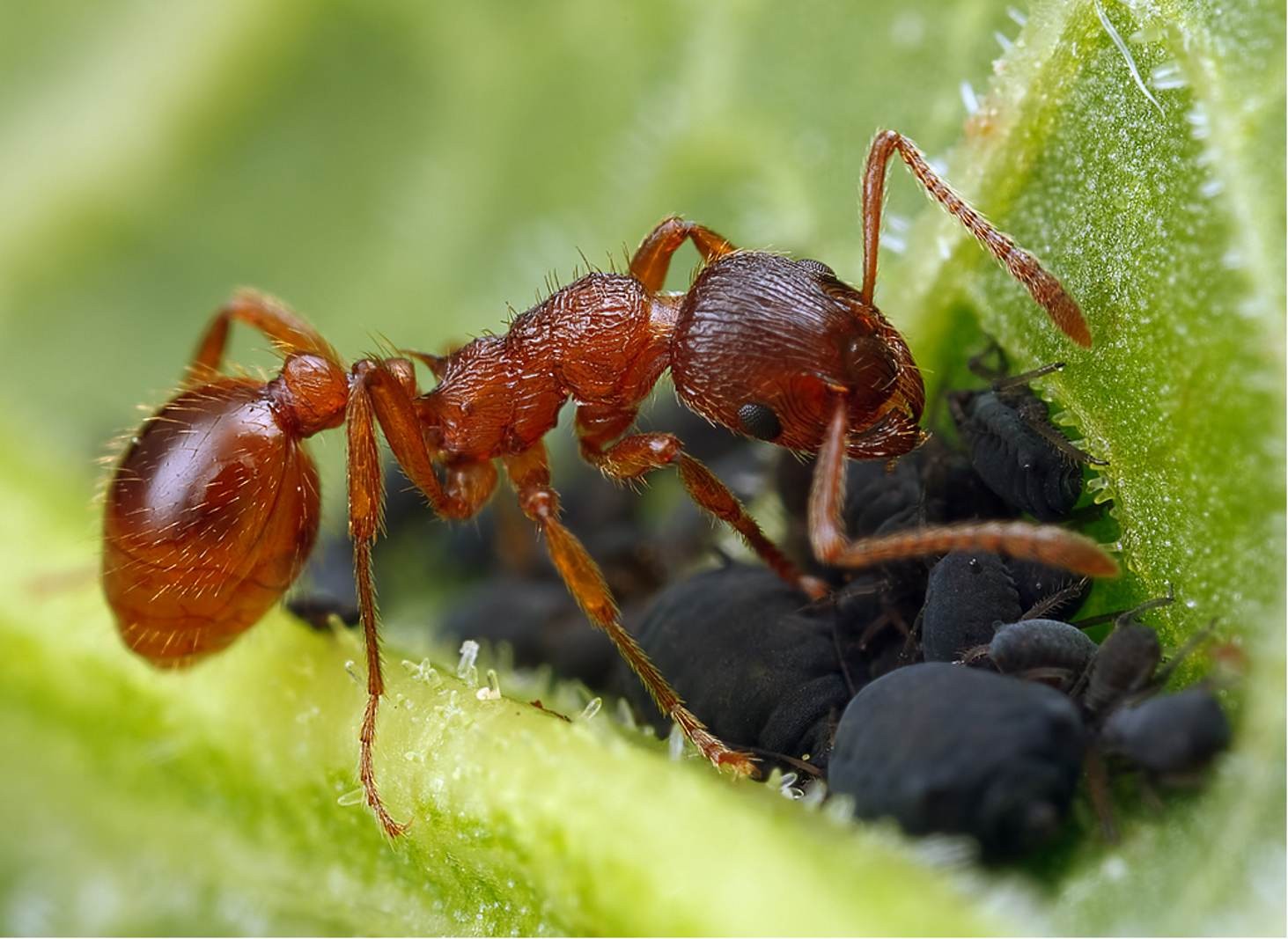
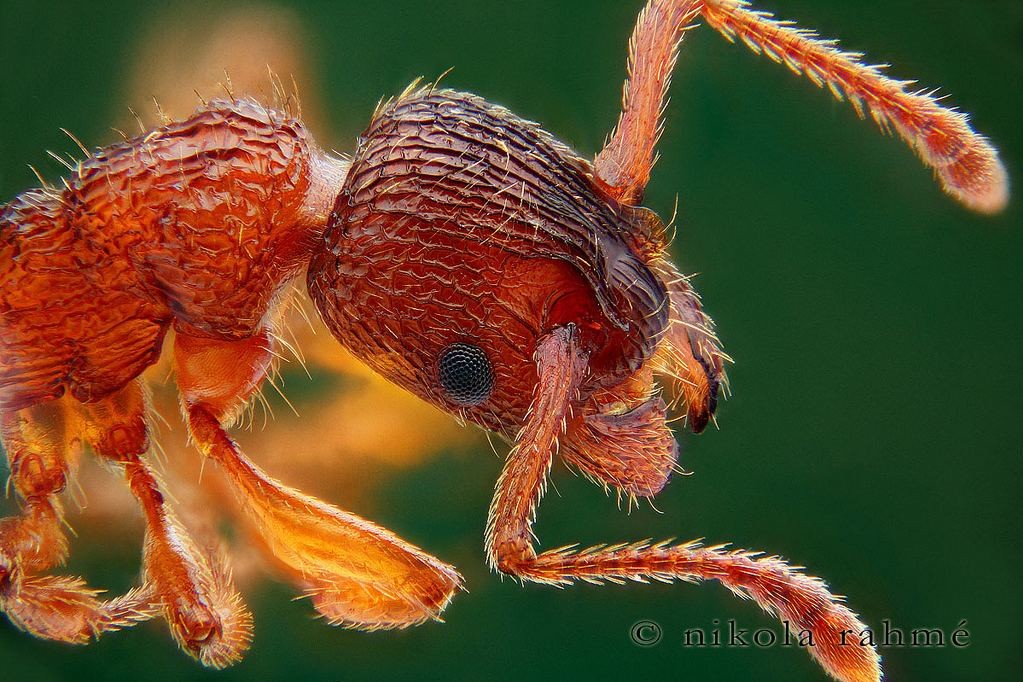
Myrmica rubra – Colony with Queen and Workers
Good hunters, capable of stinging their prey, attractive reddish-brown color. Excellent aphid breeders.
Description
The Fourmiculture Charter for our Myrmica rubra ants:
1. Approved breeding program of the Veterinary Services, managed by a certified specialist,
2. Free "Perfect Ant Keeper's Guide" and health certificate provided,
3. Ants guaranteed parasite-free,
4. Health demonstrated by queen egg-laying and the presence of brood upon shipment,
5. No "boosting" (addition of brood or external workers to sell colonies faster),
6. Guaranteed healthy delivery: partial refund in case of worker loss, full refund in case of queen loss (if delivered within 48 hours),
7. Shipping possible from -12°C to +40°C thanks to our optional insulated packaging,
8. Species present in France, non-invasive and not threatened,
see
conditions)
Myrmica rubra is often called the Red Ant and is prized in captivity because it thrives at moderate temperatures while being aggressive, allowing observation of its hunting behavior with small prey.
Perfectly capable of taking down fruit flies and micro-crickets, it's important to keep the prey size reasonable. For added convenience, Myrmica rubra can be fed thawed insects. The sting is rather painful initially but subsides quickly and is not dangerous to humans.
Myrmica rubra is easy to feed because it greatly enjoys sweet foods, partly due to its habit of consuming aphid honeydew. However, it stores little food and should be fed as often as possible (at least 3 times a week for good results).
The development of Myrmica rubra is rather slow at first but accelerates with the number of queens, as this species can have several per colony. Rubra is one of the largest Myrmica species; it is active and aggressive, making it very interesting to observe and one of our top recommendations.
Myrmica rubra swarms in July and August, and it's common to find a large number of winged queens and drones in the wild or in parking lots. However, we remind you that only wingless individuals are likely to lay eggs reliably. We offer colonies established from mated queens, either founded from the queen alone after swarming, or from giant colonies bred in our own breeding program. We benefit from well-controlled captive swarming and can therefore establish healthy colonies quickly.
Myrmica rubra has high humidity requirements and is found in cool areas along roadsides and at the edges of forests. When keeping them, provide a heated area of the nest for the brood, while maintaining a moderate temperature in the rest of the nest. The majority of the nest should be very humid. Maximize the humidity in your nest.
Myrmica rubra breeding sheet:
Queen size: approximately 7mm.
Worker size: approximately 5mm.
Food: sugary liquids, jellies, insects.
Humidity: Very high; thoroughly humidify a large area of the nest. Contact us if you require a suitable nest.
Temperature: approximately 24°C, possibly 27°C in a small section of the nest. Sensitive to high temperatures.
Hibernation: 3 months at 8-17°C, possibly shorter. Carefully monitor humidity and continue feeding the ants during this period.
Incompatible with ice-free ant farms, like all colonies with a queen!
| Latin name: |  | Myrmica rubra |
| Common name: |  | Red ant |
| Taxonomy: |  | Subfamily: Myrmicinae Genus: Myrmicini |
| Ease of breeding: |  | Attention is required to provide plenty of food, and its sting is painful but harmless. |
| Distribution : |  | From Great Britain to Central Asia, North America since the 18th century. |
| Natural habitat: |  | Prefers wetlands such as grassy areas near rivers, shaded areas, meadows, open forests. |
| Queens: |  | Polygynous, can have several queens per colony. |
| Queen : |  | Size: 5–7.5 mm Color: Reddish-brown |
| Female workers: |  | Size: 4-6mm Color: reddish brown |
| Soldier : |  | Absent |
| Males: |  | Size: 4-5 mm Color: black |
| Food : |  | Sugary liquids, millet, aphid nectar, insects (flies, mosquitoes, etc.) |
| Humidity for Myrmica rubra: |  | Feeding area: ambient or high humidity (beware of mold) Nest: High need for humidity |
| Temperature: |  | Feeding area: Room or moderate temperature. Nest: 21–24°C, avoid high temperatures across the entire surface. |
| Hibernation: |  | Diapause is required; it should be long and cold for the queen to rest properly. Approximately 3 months or more, at temperatures between 5 and 12°C. |
| Type of natural nest: |  | It digs its nest in the ground, under stones, sometimes in dead wood. Grass is generally present. |
| Type of artificial nest: |  | With a very humid slab or closed terrarium. |
| Size of the artificial nest: |  | Start with a small or excavable nest |
| Substrate: |  | No substrate on a wet slab, or a wet sand/clay mixture. |
| Plants: |  | Often found near plants with aphids |
| Decoration: |  | Avoid decorations that are likely to rot due to humidity. |
| Description: |  | Myrmica rubra is an aggressive, robust species with a high need for humidity and daily liquid food. It is very common and relatively easy to breed. |
| Life cycle: |  | Swarming: Generally during the warm days of August and September. Founding: Semi-claustral (the queen sometimes leaves the colony to forage for food, or manages to raise the larvae independently). Approximately 6 weeks from egg to adult, depending on the temperature. Colony size: Estimated at a maximum of 20,000 workers. |
| Quantity for sale: |  | 1 queen with brood and workers according to options. |
 |
Photo of Myrmica rubra No. 3 by Nikola Rahmé. Gallery here. Photos No. 1, 2 & 4 by Steb1. Gallery here.
Additional information
| Weight | 0.2 kg |
|---|---|
| 3-Month Success Guarantee | |
| Number of queens | |
| Number of female workers |