Parasitic ant Strongylognathus testaceus + Tetramorium caespitum
89,00€
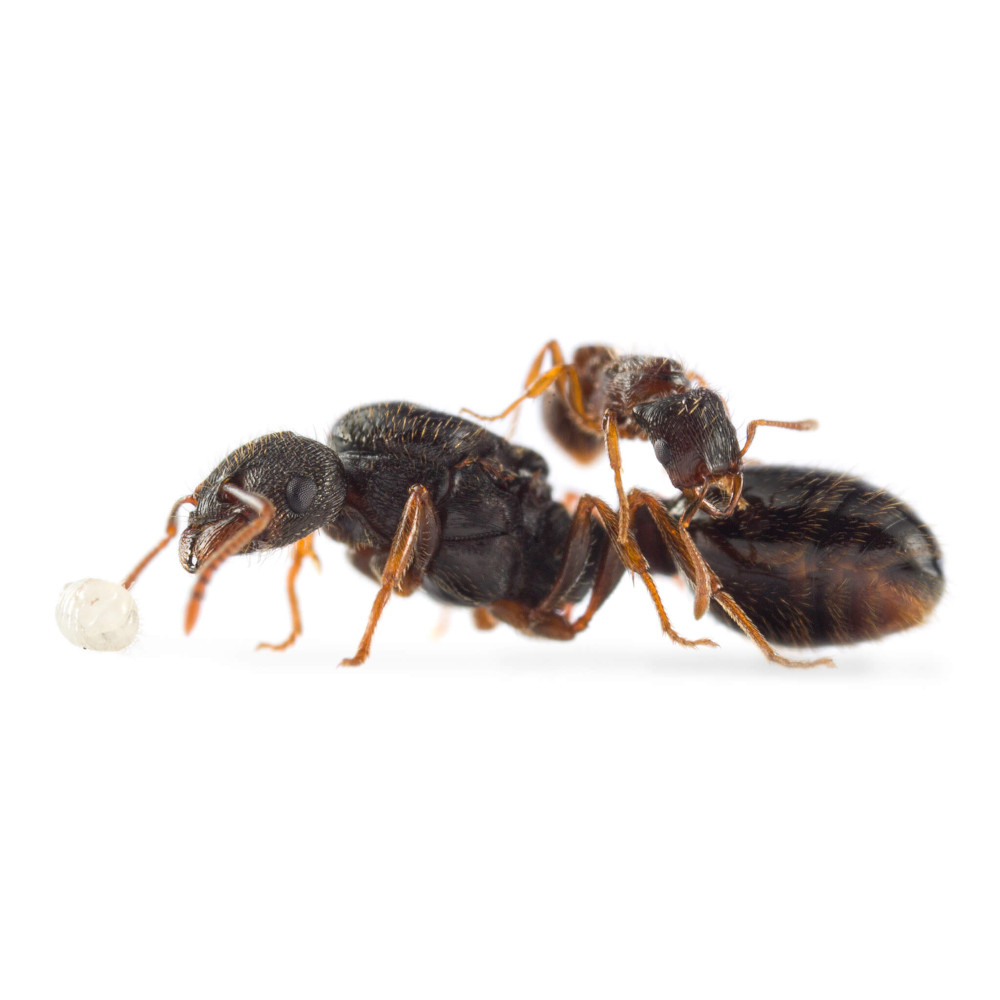
Queen Strongylognathus testaceus, a very rare species, natural parasite of Tetramorium
You'll love it:
- ❤️ Rare parasitism to observe: the parasitic queen is being fed by the Tetramorium
- ❤️ Strongylognathus parasitic queen with sickle-shaped mandibles,
- ❤️ Allows you to see two species develop together
- ❤️ Easy to raise, follow the breeding sheets for Tetramorium caespitum.
Out of stock
Description
Mixed foundation Tetramorium caespitum & Strongylognathus testaceus, queens + brood
A fascinating parasitic alliance between two European species
General description
This colony foundation is a rare and captivating phenomenon formed by a Tetramorium caespitum cohabiting with a Strongylognathus testaceus , a species of parasitic ant known as a dulotic . This exceptional duo perfectly illustrates an intriguing evolutionary strategy: permanent social parasitism .
Biological details
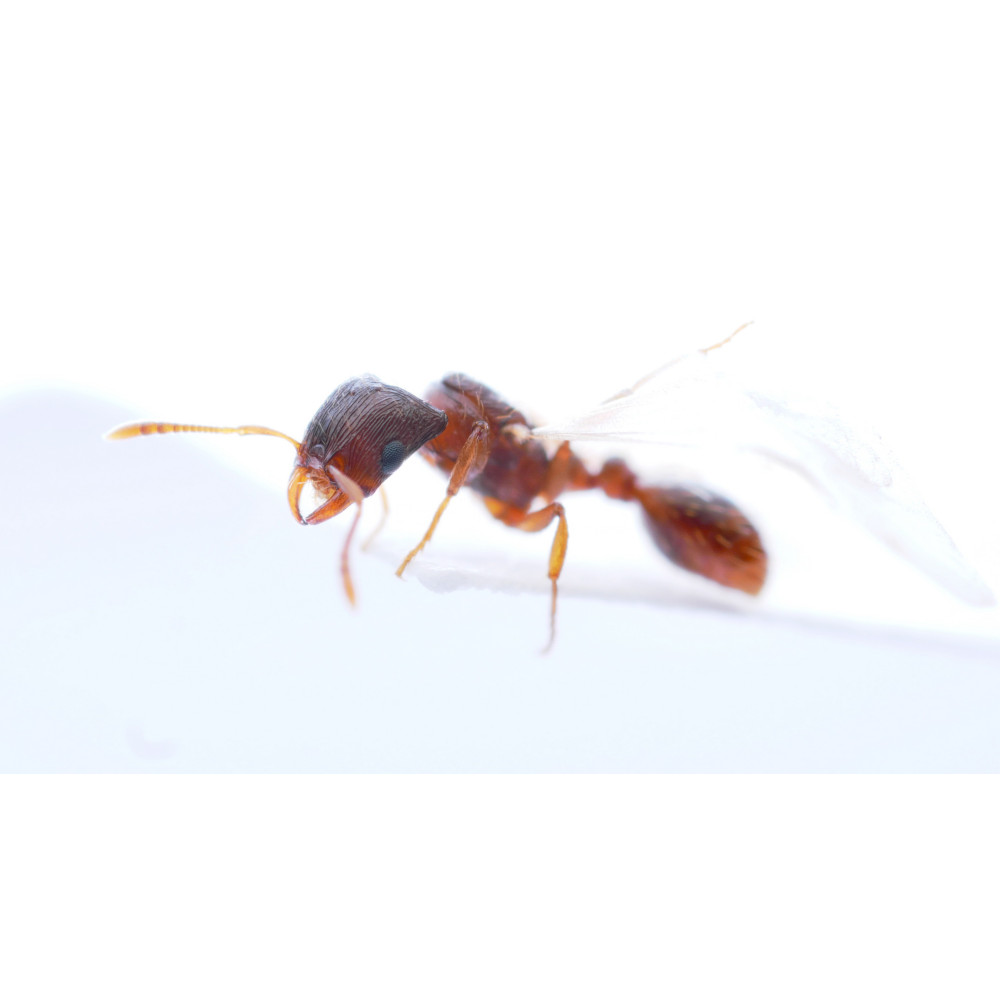
- Tetramorium caespitum is a common species in Europe, known for its hardiness, rapid adaptation and ability to establish populous colonies.
- Strongylognathus testaceus is an obligate parasitic species that cannot establish itself on its own. It infiltrates Tetramorium colonies, particularly T. caespitum, to lay its own eggs.
In this type of association, Tetramorium workers raise the larvae of the parasitic queen. Strongylognathus does not have its own worker caste. It is therefore a perfect example of permanent, non-destructive parasitism , where the two queens can coexist for a time, potentially leading to the gradual replacement of the host queen or the complete domination of the parasite.
breeding conditions
- Difficulty : Medium
- Foundation type : Already formed, with brood (colony in development)
- Queens : 1 Tetramorium caespitum + 1 Strongylognathus testaceus
- Diet : Proteins (insects, protein jellies), sugars (diluted honey, homemade syrups) after the workers emerge; do not feed during colony founding. The Tetramorium queen lives off her reserves and feeds the parasitic queen.
- Temperature : 26-28°C during the day, 20-24°C at night.
- Hibernation : Yes, diapause of 2 to 3 months recommended between 8 and 15°C
🔬 Scientific and educational interest
This colony represents a unique opportunity for passionate myrmecophiles and educational institutions. It allows for the observation of:
- Social parasitism
- Inter-queen acceptance
- Mixed brood behavior
- Differential development of larvae
⚠️ Important notes
- Strongylognathus testaceus does not survive without a Tetramorium host , and it is impossible to have a pure Strongylognathus colony.
- Long-term dynamics depend on the behavior of Tetramorium worker ants. Parasitism is not immediately destructive, but can influence the viability of the colony over several generations.
Photo 1: Philipp_Hönle
Additional information
| Weight | 0.1 kg |
|---|