

Aphaenogaster longiceps – Australia
129,00€
An unusual Australian species, polygynous and with good year-round development. Delivered with an export certificate. The queens have a distinctive shape and spikes on their thorax.
Out of stock
Description
Presentation of the species Aphaenogaster longiceps:
Aphaenogaster longiceps is reminiscent of Aphaenogaster subterranea or a giant Pheidole, with characteristics that make it very attractive for breeding: it develops quickly and does not need to overwinter*, its colonies can reach up to 10,000 workers with one or more queens per colony and its morphology is quite particular.
*It is possible to turn off the heating for 2 months at the end of the summer, depending on the possible decrease in egg production, without obligation.
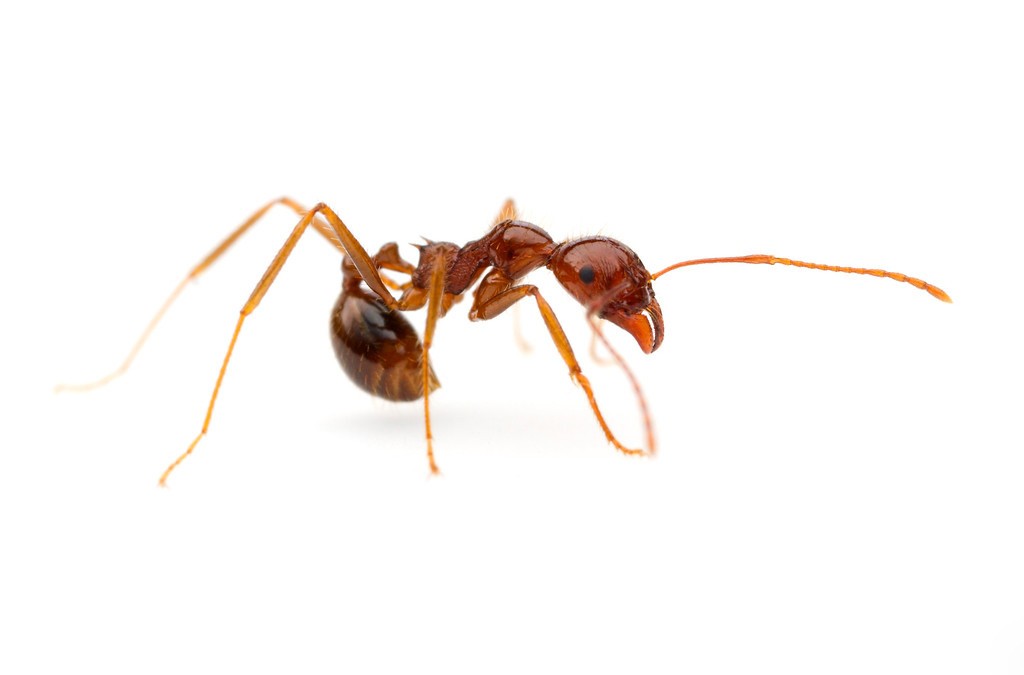
The worker bees have long legs which make them appear larger, hence their name "longiceps".
Of a suitable size for good observation, the workers measure 5 to 8mm and the queen(s) are clearly more impressive with a size of around 10 to 13mm.
The queen is more atypical, with a very massive and rounded thorax, almost swollen. She is orange-brown in color, while the workers are more of a brown/honey color (depending on the colony).
The worker bees forage for food throughout the day but intensify their activity at night. They enjoy a wide variety of foods: jellies, insects, sugary liquids, fruits, and even small seeds like millet.
Relatively non-aggressive in small colonies, they forage for food and are capable of biting and stinging without causing much pain. Small prey such as fruit flies can be offered live in fairly established colonies.
Aphaenogaster longiceps is native to Australia where it explores large territories, from seaside to rainforests and drier terrain to dig nests with funnel-shaped entrances, hence its nickname "funnel ant".
Easy to raise in moderate humidity, this species is suitable for all ant keepers and adapts to any properly constructed nest. The queens are particularly interesting to observe due to their size, color, and morphology.
Our selling price includes an export permit paid to the Australian government for each queen collected during swarming, along with all administrative formalities and an Australian veterinary certificate attesting that the queen has been individually checked by a veterinarian and is free of parasites and diseases. We also offer optional insulated packaging.
_______________________________________________________________
The Fourmiculture Charter on legislation and ethics:
Fourmiculture offers this exceptional species originating from Australia, a very protective country which combines both the most impressive species in the world, and extremely strict legislation on their collection and export.
Because many exotic species for sale are of fraudulent origin, Fourmiculture is working with the authorities. The colony will arrive with:
1/ an export certificate
2/ an Australian veterinary certificate
3/ a health and legislative fact sheet.
These documents attest to our official authorization to collect and export queens of this species. We import them via express courier, regardless of the cost, to ensure safe transport. Each colony is then individually inspected to confirm the absence of parasites and the presence of brood.
Fourmiculture is also an establishment recognized by the French veterinary services, in possession of a certificate of competence for the breeding and sale of ants, validated by myrmecologists, civil and environmental protection services (decision No. 2016195-0002 of the Departmental Directorate for the Protection of Populations).
Each colony is labeled, bears a batch number, and has been professionally tracked from queen collection to delivery.
As a private individual, breeding this species does not require any authorization as it is neither protected, nor threatened, nor invasive, nor dangerous. However, we remind you that the law prohibits releasing a non-native species and offer to take back your colonies.
_____________________________________________________________
The Fourmiculture Charter on this exotic species:
1/ Health demonstrated by the queen laying eggs and the presence of brood upon shipment, guaranteed parasite-free
2/ No "boost" (addition of brood or external workers to sell colonies faster, the queen is raised since swarming),
3/ Guaranteed delivery in good health: partial refund in case of worker loss, full refund in case of queen loss (with 24-48h carrier),
4/ Breeding guide and health record provided,
5/ Buyback of your colony up to €30 if you wish to part with it (see conditions).
Optional 3-month Success Guarantee:
For those who want complete peace of mind, we offer a 3-month Success Guarantee which allows you to receive a new colony at no cost if your colony dies within 3 months of delivery, without discussion and regardless of the reason for the loss!
Conditions: Shipping is free within mainland France only; replacement with an identical colony is subject to availability. Loss must be proven by a clear photograph within 90 days of delivery.
_____________________________________________________________
The Fourmiculture Charter on delivery:
Our experience allows us to virtually eliminate losses during transport, and we have been using specially designed and tested packaging for this purpose for 10 years. Any loss of the queen during transport would automatically entitle you to a 100% refund (valid with 48-hour courier service).
Service offered:
Delivery 365 days a year, from -12°C to +40°C thanks to our free insulated packaging if necessary.
_______________________________________________________________
More information on Aphaenogaster longiceps:
– Queen size: 10-13mm
– Worker size: 5-8mm
– Breeding temperature: 27°C during the day, 20-24°C at night
– Wintering: None. Heat all year round, or respect a period of 2 months at room temperature to guarantee the longevity of the queen and her egg-laying.
– Food: Small live insects (crickets size 2 to 4, fruit flies, mosquitoes etc.) or dead insects, sugary liquids, jellies, meat, sugary liquids, fruits, etc.
– Humidity requirement: low to medium (always keep rooms humid).
– Polygynous (potentially several queens per colony)
– Maximum colony population: estimated at a maximum of 10,000.
– Colour: Queen reddish brown, workers lighter, honey colour.
– Estimated maximum lifespan of the queen: 7 to 15 years
Photo 1: © Steve Shattuck photo 2: © Alexander Wild
You must be logged in to post a review.
Notice
There are no reviews yet.