
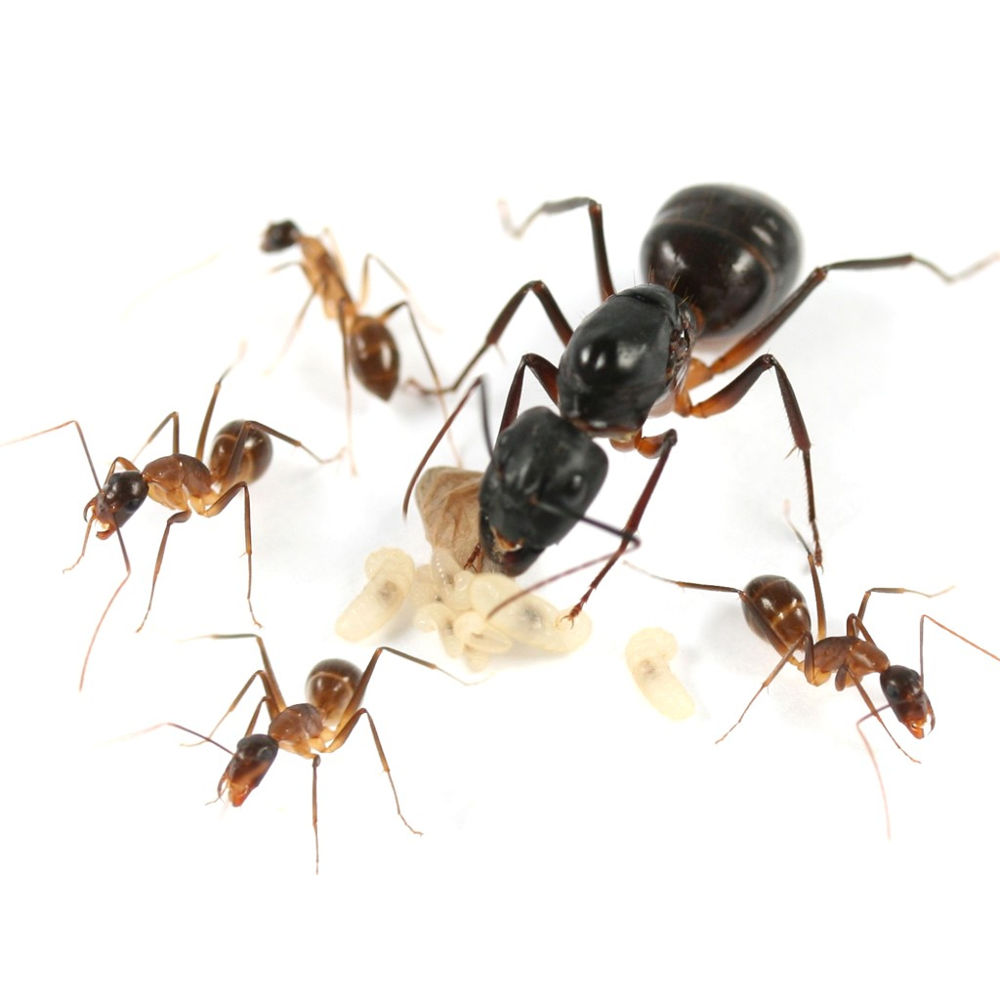
Camponotus fellah – Colony with queen and workers
The initial price was: €119.00.115,00€The current price is: €115.00.
Camponotus fellah is a very beautiful species from Africa whose size is impressive. Easy to raise, wintering is not necessary and allows you to enjoy it all year round. Recommended by Fourmiculture for Camponotus lovers!
Out of stock
Description
Camponotus fellah benefits from the Fourmiculture on our Ants:
1. Breeding approved by Veterinary Services, carried out by a specialist under certificate of capacity,
2. Guide to the Perfect Antculturist offered and satin sheet provided,
3. Ants guaranteed without parasites,
4. Health demonstrated by the laying of the queen and the presence of brood during shipping,
5. No “boost” (addition of brood or external workers to sell the colonies faster),
6. Guaranteed delivery in good health: partial reimbursement in the event of loss of workers, total reimbursement in the event of loss of the queen (if delivered within 48 hours),
8. Species present in Europe, non-invasive and not threatened ,
9. Colony taken back and costs covered if you wish to part with it (see conditions).
______________________________________________________________________________________________
Camponotus fellah is a magnificent species from the Middle East, very large, rather easy to breed with a light wintering to be expected and a low need for humidity. Its coloration is orange-yellow with black on the abdomen and head and its size is particularly impressive. The majors are superb and aggressive, not hesitating to defend the colony at the slightest attack! Good hunter.
More videos on the Campo-Zone .
Compared to Camponotus sanctus: less humidity to be expected, slightly darker colouring, probably larger majors.
Camponotus fellah has a minor worker caste of approximately 6-7mm and later, a major worker caste appears with a developed head and a size of around 1.5cm to 1.8cm. The “small” minor workers are lighter and vary from transparent yellow to darker orange depending on the colony.
The breeding of Camponotus fellah is easy, the diet is varied and particular, it consists of jellies, sweet liquids, insects etc. Wintering is not necessary. It is thus more accessible than the European Camponotus…
Size of the queen Camponotus fellah: about 15mm
Size of the workers: 6/7mm.
Up to 18mm for the majors who arrive later in the colony. Day temperature: 27-30°C for good development
Night temperature: 19-24°C.
Humidity: Low.
Only small part of the nest should be moist. Wintering: not necessary
| Latin name: |  |
Ca mponotus fellah |
| Trivialname: |  |
– No common name |
| Taxonomy: |  |
Subfamily: Formicinae: Genus Camponote |
| Difficulty level |  |
1) Suitable for beginners |
| Distribution: |  |
North Africa, Middle East |
| Habitat: |  |
Deserts (in nature) anthill in plexi, plaster or sand in captivity |
| Type of gyne: |  |
monogynous, sometimes olygogynous |
| Queen: |  |
Size: 17 – 19mm Colour: Black; Gastre and reddish brown legs |
| Workers: |  |
Size: 7 – 18mm Colour: Black; Abdomen and legs reddish brown, extremely polymorphic (with small workers minor, medium workers media and large workers major |
| Soldiers: |  |
Rather considered as Major workers (large workers with a powerful head) |
| Males: |  |
Size: 8 – 12mm Colour: black |
| Feed |  |
Sweet and protein liquids, insects |
| Humidity : |  |
Dry hunting ground, nest with low to medium humidity |
| Temperature: |  |
A hot spot at 28°C to be expected on the nest |
| Hibernation: |  |
No hibernation but a light rest of 2 or 3 months with reduced growth and room temperature. |
| Natural nest type: |  |
Builds its nest in the ground |
| Type of artificial nest: |  |
Plexiglas, cellular concrete, plaster, terrarium, etc. |
| Nest size: |  |
Small to medium for beginners, 8mm deep chambers at the very least |
| Substrate: |  |
Wood, sand, sand/loam mixture, or no substrate |
| Plants: |  |
Not necessary. Also lives in forest and mountainous areas with moss, grass and other plants. More suited to dry conditions, however. |
| Decoration: |  |
Not necessary, possibility of wood, stones, gravel, etc. |
| Origin : |  |
Africa (one of the largest species in Africa) and Middle East (Turkey, Arab countries) |
| Growth : |  |
6-8 weeks from egg to adult. Swarming in March/April. Cloister foundation (the gyne raises the larvae alone). Lifespan of the queen estimated at 29 years maximum! Maximum population estimated at 10,000 workers. |
| Quantity on sale: |  |
Fertilized queen + brood + workers (depending on option) |
Further information
| Weight | 0.2kg |
|---|---|
| Young colony feeding area | Tube + Plexi feeding area, Tube with ants only |
You must be logged in to post a review.
Notice
There are no reviews yet.